
Words in italic type have been added for clarity. They are not found in the original Hebrew or Aramaic.
{1 of 2} II Kings 20 – “Stairway to Heaven!” [History]
{2 of 2} II Kings 20 – “Don’t Die Twice – It’s Alright” [Personal Application, Pattern of a Resurrection]
II Kings 20
What should I learn from this chapter?
- The prophecy of Isaiah concerning Babylon.
- The Kingship of Hezekiah before his son Manasseh.
- That all Kings labeled “Good” reigned in Judah.
- Hezekiah is listed among the “Good” Kings of Judah.
- Hezekiah witnessed the destruction of the northern Kingdom of Israel by Sargon’s Assyrians in 722 BC and was king of Judah during the siege of Jerusalem by Sennacherib in 701 BC
- II Chronicles 32:20-21 Sennacherib’s Defeat and Death – Now because of this King Hezekiah and the prophet Isaiah, the son of Amoz, prayed and cried out to heaven. Then the Lord sent an angel who cut down every mighty man of valor, leader, and captain in the camp of the king of Assyria. So he returned shamefaced to his own land. And when he had gone into the temple of his god, some of his own offspring struck him down with the sword there.
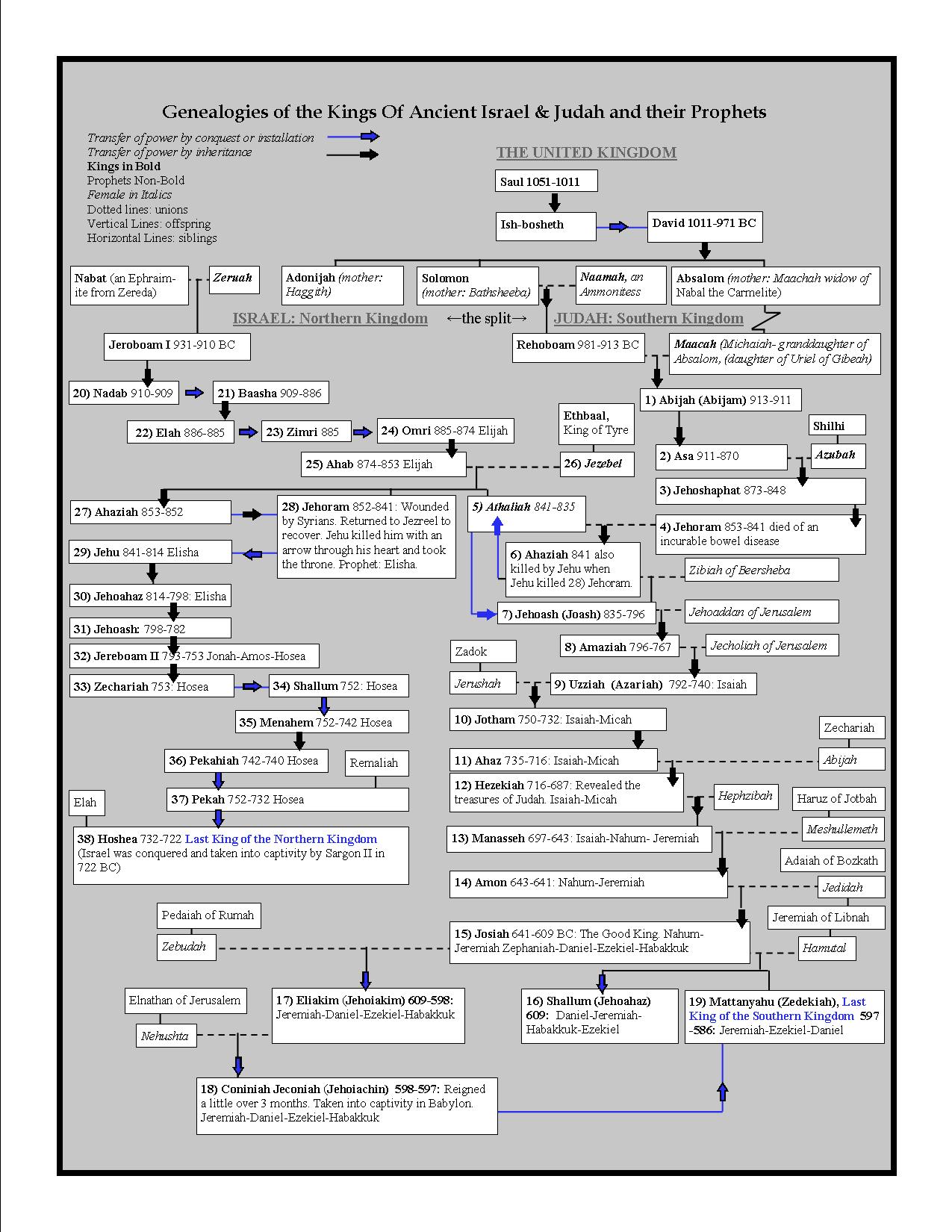
- As the 13th king of Judah, Hezekiah reigned 716-687 BC
- Hezekiah became king when he was twenty-five years old, and he reigned twenty-nine years in Jerusalem. His mother’s name was Abijah the daughter of Zechariah and the wife of King Ahaz of Judah. (Abijah aka Abi in II Kings 18:2, II Chronicles 29:1)
Hezekiah’s Life Extended
II Kings 20:1 In those days Hezekiah #12 was sick and near death. And Isaiah the prophet, the son of Amoz, went to him and said to him, “Thus says the Lord (Yᵊhōvâ): ‘Set your house in order, for you shall die, and not live.’ ”
II Kings 20:2 Then he turned his face toward the wall, and prayed to the Lord (Yᵊhōvâ), saying,
II Kings 20:3 “Remember now, O Lord (Yᵊhōvâ), I pray, how I have walked before You in truth and with a loyal heart, and have done what was good in Your sight.” And Hezekiah wept bitterly.
II Kings 20:4 And it happened, before Isaiah had gone out into the middle court, that the word of the Lord (Yᵊhōvâ) came to him, saying,
II Kings 20:5 “Return and tell Hezekiah the leader of My people, ‘Thus says the Lord (Yᵊhōvâ), the God (‘ĕlōhîm) of David your father: “I have heard your prayer, I have seen your tears; surely I will heal you. On the third day you shall go up to the house of the Lord (Yᵊhōvâ).
- Hezekiah reigned alone from 716-697 BC for nineteen years, then with his son Manassah 697-687 BC for ten years; a total of twenty nine years.
It can be assumed Hezekiah was dying from a boil ~702 BC, fifteen years prior to his death.
II Kings 20:6 And I will add to your days fifteen years. I will deliver you and this city from the hand of the king of Assyria; and I will defend this city for My own sake, and for the sake of My servant David.” ’ ”
II Kings 20:7 Then Isaiah said, “Take a lump of figs.” So they took and laid it on the boil, and he recovered.
II Kings 20:8 And Hezekiah said to Isaiah, “What is the sign that the Lord (Yᵊhōvâ) will heal me, and that I shall go up to the house of the Lord (Yᵊhōvâ) the third day?”
II Kings 20:9 Then Isaiah said, “This is the sign to you from the Lord (Yᵊhōvâ), that the Lord (Yᵊhōvâ) will do the thing which He has spoken: shall the shadow go forward ten degrees or go backward ten degrees?”
II Kings 20:10 And Hezekiah answered, “It is an easy thing for the shadow to go down ten degrees (Lit. steps); no, but let the shadow go backward ten degrees.”
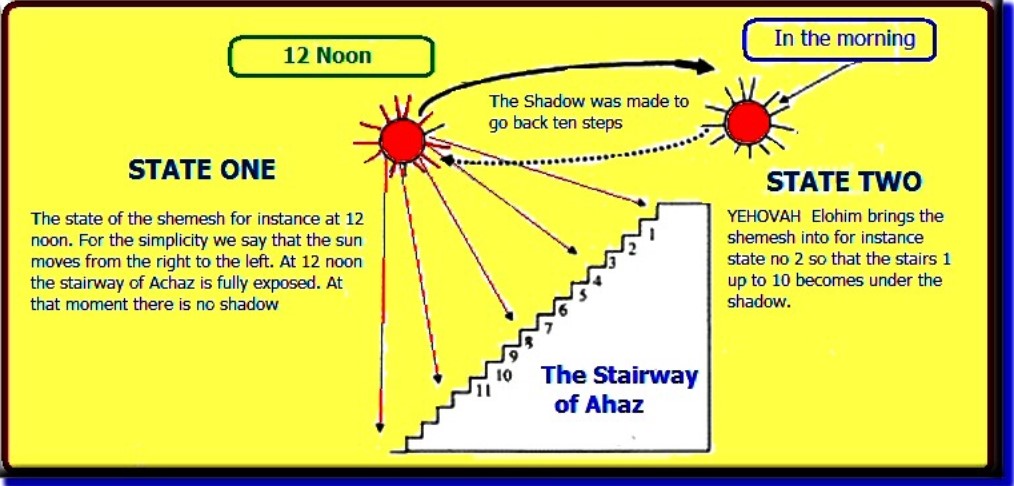
II Kings 20:11 So Isaiah the prophet cried out to the Lord (Yᵊhōvâ), and He brought the shadow ten degrees (Lit. steps) backward, by which it had gone down on the sundial of Ahaz (Hezekiah’s father).
- Ahaz was Hezekiah’s father. Ahaz is credited to be the inventor of the sundial.
- Speculative Image of Ahaz’s sundial:
The Babylonian Envoys
II Kings 20:12 At that time Berodach-Baladan (Merodach-Baladan, Is. 39:1) the son of Baladan, king of Babylon, sent letters and a present to Hezekiah, for he heard that Hezekiah had been sick.
II Kings 20:13 And Hezekiah was attentive to them, and showed them all the house of his treasures—the silver and gold, the spices and precious ointment, and all his armory (Lit. the house of his armor)—all that was found among his treasures. There was nothing in his house or in all his dominion that Hezekiah did not show them.
II Kings 20:14 Then Isaiah the prophet went to King Hezekiah, and said to him, “What did these men say, and from where did they come to you?”
So Hezekiah said, “They came from a far country, from Babylon.”
II Kings 20:15 And he said, “What have they seen in your house?”
So Hezekiah answered, “They have seen all that is in my house; there is nothing among my treasures that I have not shown them.”
II Kings 20:16 Then Isaiah said to Hezekiah, “Hear the word of the Lord (Yᵊhōvâ):
II Kings 20:17 ‘Behold, the days are coming when all that is in your house, and what your fathers have accumulated until this day, shall be carried to Babylon; nothing shall be left,’ says the Lord (Yᵊhōvâ).
II Kings 20:18 ‘And they shall take away some of your sons who will descend from you (be born from), whom you will beget; and they shall be eunuchs in the palace of the king of Babylon.’ ”
(@ prophecy alert: fulfilled 605 BC)
Based on this Verse it is Believed Daniel and his Friends became Eunuchs
- In 605 BC Daniel and his friends were taken as hostages by Nebuchadnezzar to Babylon during the reign of King Jehoiakim. Nebuchadnezzar took those of the royal household and it is believed that Daniel as well as his friends would be related to the kingly family.
- The kingship ultimately transferred within the family to Zedekiah when Judah was conquered. Nebuchadnezzar made Zedekiah witness the killing of his family before blinding him.
- If Daniel had been part of the royal family, the possibility exists that he could have been killed with the rest of the royal family at that time, and perhaps his captivity saved his life.
- Isaiah tells Hezekiah “they shall be eunuchs in the palace of the king of Babylon” tells us that in all likely-hood Daniel was made a eunuch. Furthermore; he was placed under a eunuch for his training.
- It was ~715 BC when Isaiah’s prophecy of the Babylonian conquest orchestrated by Nebuchadnezzar was fulfilled in 587 BC. This prophecy was given ~128 years prior to the fall of Jerusalem. The steps leading up to it are: (The largest numbers are the farthest in the past while the smallest numbers are the closest to the present):
- 609 BC Beginning with The death of Josiah
- 609 BC The captivity of his son, Jehoahaz reigned for 3 months in Josiah’s place by Pharaoh.
- ~608 BC Pharaoh driven out of Judah by Nebuchadnezzar
- 605 BC Daniel and his friends are taken captive.
- 603 BC The installation of Jehoiakim (Eloiakim) by Nebuchadnezzar, also a son of Josiah.
- 598 BC Jehoiakim thrown over the wall by Nebuchadnezzar’s army
- 597 BC Jehoiachin is installed by Nebuchadnezzar to replace his father Jehoiakim.
- 597 BC Ezekiel and thousands are taken captive with King Jehoiachin.
- 596 BC The last king of Israel installed by Nebuchadnezzar is Zedekiah, a son of Josiah
- 587 BC Nebuchadnezzar destroys Jerusalem and takes all the citizens captive.
II Kings 20:19 So Hezekiah said to Isaiah, “The word of the Lord (Yᵊhōvâ) which you have spoken is good!” For he said, “Will there not be peace and truth at least in my days?”
Death of Hezekiah
II Kings 20:20 Now the rest of the acts of Hezekiah—all his might, and how he made a pool and a tunnel (aqueduct) and brought water into the city—are they not written in the book of the chronicles of the kings of Judah.
II Kings 20:21 So Hezekiah #12 rested with his fathers (Died and joined his ancestors). Then Manasseh #13 his son reigned in his place.
{1 of 2} II Kings 20 History
{2 of 2} II Kings 20-Personal Application
Previous: II Kings 19
Next: II Kings 21
 Quantum Study Bible