
Words in italic type have been added for clarity. They are not found in the original Hebrew or Aramaic.
- Kings Ahab and king Joram (Jehoram)
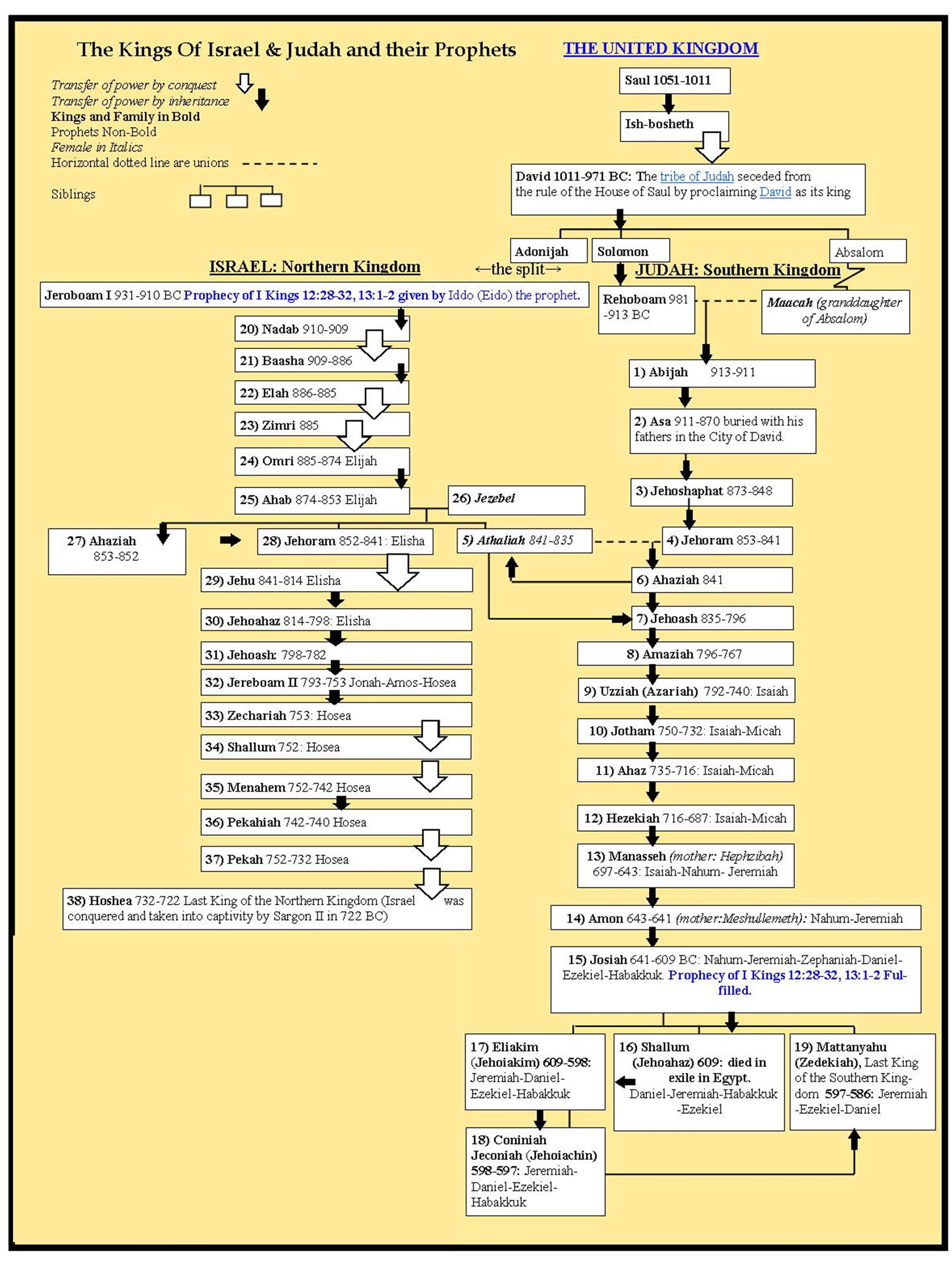
II Kings 6
- About the title: “Just Ask the ‘Axe’ “
- Highlighted in text by Black is Israel rather than Judah
The Floating Ax Head
II Kings 6:1 And the sons of the prophets said to Elisha, “See now, the place where we dwell with you is too small for us.
II Kings 6:2 Please, let us go to the Jordan, and let every man take a beam from there, and let us make there a place where we may dwell.”
- Jordan is the place where John baptized Jesus.
So he answered, “Go.”
II Kings 6:3 Then one said, “Please consent to go with your servants.”
And he answered, “I will go.”
II Kings 6:4 So he went with them. And when they came to the Jordan, they cut down trees.
- TREES:
Symbolic of a stand of men. - CUT DOWN:
gāzar not only means to cut down but to cut in two, divide.
Those who came to the Jordan in Jesus’ day were divided.
John 3:22 After these things Jesus and His disciples came into the land of Judea, and there He remained with them and baptized.
Luke 7:30 But the Pharisees and lawyers (experts in the law) rejected the will of God for themselves, not having been baptized by him - Elisha is a type of Jesus.
II Kings 6:5 But as one was cutting down a tree, the iron ax head fell into the water; and he cried out and said, “Alas, master! For it was borrowed.”
- The same Jesus which is prophesied to rule all nations with a rod of iron (Rev 12:5, Rev 19:15). In a sense this world “borrowed” Jesus from His Throne in heaven.
II Kings 6:6 So the man of God (‘ĕlōhîm) said, “Where did it fall?” And he showed him the place. So he cut off a stick, and threw it in there; and he made the iron float.
- TO FALL:
nāp̄al not only means to fall but to lie down. Jesus voluntarily “lied down” in His grave. - WATER/SEA
Symbolic of the fluidity of masses of people. - See Topic: Water, Sea
- STICK:
ʿēṣ not only means a stick but a tree, wood; the Cross - THE IRON FLOATED
It rose to the surface as a type of resurrection.
II Kings 6:7 Therefore he said, “Pick it up for yourself.” So he reached out his hand and took it.
- The Good News of salvation is presented but each man must pick it up for themselves.
The Blinded Syrians Captured
II Kings 6:8 Now the king of Syria was making war against Israel; and he consulted with his servants, saying, “My camp will be in such and such a place.”
II Kings 6:9 And the man of God (‘ĕlōhîm) sent to the king of Israel, saying, “Beware that you do not pass this place, for the Syrians are coming down there.”
II Kings 6:10 Then the king of Israel sent someone to the place of which the man of God (‘ĕlōhîm) had told him. Thus he warned him, and he was watchful there, not just once or twice.
- Elisha worked on the king of Israel’s behalf.
II Kings 6:11 Therefore the heart of the king of Syria was greatly troubled by this thing; and he called his servants and said to them, “Will you not show me which of us is for the king of Israel?”
II Kings 6:12 And one of his servants said, “None, my lord, O king; but Elisha, the prophet who is in Israel, tells the king of Israel the words that you speak in your bedroom.”
II Kings 6:13 So he said, “Go and see where he is, that I may send and get him.”
And it was told him, saying, “Surely he is in Dothan.”
- The meaning of Dothan is two wells, or doubled. There are questions in the king of Syria’s own mind that one of his own servants is “double minded” – a spy.
II Kings 6:14 Therefore he sent horses and chariots and a great army there, and they came by night and surrounded the city.
II Kings 6:15 And when the servant of the man of God (‘ĕlōhîm) arose early and went out, there was an army, surrounding the city with horses and chariots. And his servant said to him, “Alas, my master! What shall we do?”
II Kings 6:16 So he answered, “Do not fear, for those who are with us are more than those who are with them.”
II Kings 6:17 And Elisha prayed, and said, “Lord (Yᵊhōvâ), I pray, open his eyes that he may see.” Then the Lord (Yᵊhōvâ) opened the eyes of the young man, and he saw. And behold, the mountain was full of horses and chariots of fire all around Elisha.
II Kings 6:18 So when the Syrians came down to him, Elisha prayed to the Lord (Yᵊhōvâ), and said, “Strike this people, I pray, with blindness.” And He struck them with blindness according to the word of Elisha.
II Kings 6:19 Now Elisha said to them, “This is not the way, nor is this the city. Follow me, and I will bring you to the man whom you seek.” But he led them to Samaria.
- Samaria is the capital of Israel.
II Kings 6:20 So it was, when they had come to Samaria, that Elisha said, “Lord (Yᵊhōvâ), open the eyes of these men, that they may see.” And the Lord (Yᵊhōvâ) opened their eyes, and they saw; and there they were, inside Samaria!
II Kings 6:21 Now when the king of Israel saw them, he said to Elisha, “My father, shall I kill them? Shall I kill them?”
II Kings 6:22 But he answered, “You shall not kill them. Would you kill those whom you have taken captive with your sword and your bow? Set food and water before them, that they may eat and drink and go to their master.”
II Kings 6:23 Then he prepared a great feast for them; and after they ate and drank, he sent them away and they went to their master. So the bands of Syrian raiders came no more into the land of Israel.
Syria Besieges Samaria in Famine
- Syria continues to lay a siege against Samaria, cutting off their ability to procure food creating a famine for the city.
II Kings 6:24 And it happened after this that Ben-Hadad king of Syria gathered all his army, and went up and besieged Samaria.
- Ben-Hadad: Hadad was the god of Syria, a Storm God providing Rain.
See: Topic: Idol Gods of Other Nations
II Kings 6:25 And there was a great famine in Samaria; and indeed they besieged it until a donkey’s head was sold for eighty shekels of silver, and one-fourth of a kab (Approximately 1 pint) of dove droppings for five shekels of silver.
II Kings 6:26 Then, as the king of Israel (Joram/Jehoram) was passing by on the wall, a woman cried out to him, saying, “Help, my lord, O king!”
II Kings 6:27 And he said, “If the Lord (Yᵊhōvâ) does not help you, where can I find help for you? From the threshing floor or from the winepress?”
- One is for eating: bread, and the other for drinking: wine, both of which were uselessly empty.
- A synonym for tribulation is to thresh, or thrash.
- The Seven Year Tribulation (Famine) is called a time of threshing (affliction).
- Winepress: Jesus treads out the grapes of Wrath during the tribulation.
- This is a time of tribulation for Israel
- But another is coming: the Seven Year Tribulation still prophesied for the world’s future.
- Also marked with famine.
- The Seven Year Tribulation is called “The time of Jacob’s trouble” because it was a time when Jacob believed his favorite son was dead and his family was in a seven year famine. Then he discovered his favorite son was alive; to Jacob it was as though his son had been resurrected and instead of famine the family was blessed with the prosperity of plenty.
II Kings 6:28 Then the king said to her, “What is troubling you?”
And she answered, “This woman said to me, ‘Give your son, that we may eat him today, and we will eat my son tomorrow.’
II Kings 6:29 So we boiled my son, and ate him. And I said to her on the next day, ‘Give your son, that we may eat him’; but she has hidden her son.”
II Kings 6:30 Now it happened, when the king heard the words of the woman, that he tore his clothes; and as he passed by on the wall, the people looked, and there underneath he had sackcloth on his body.
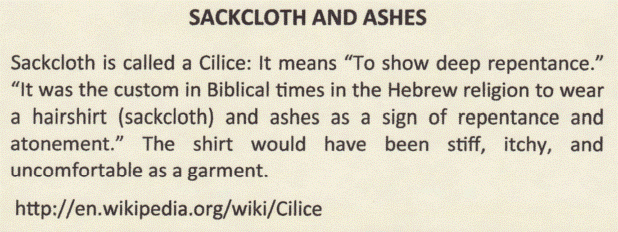

Joram (Jehoram “hid” his sign of repentance which is not repentance.To repent is to acknowledge openly.
Sin Blinds Us to the Fact that we are Sinners
II Kings 6:31 Then he said, “God (‘ĕlōhîm) do so to me and more also, if the head of Elisha the son of Shaphat remains on him today!”
- Elisha is the target of hatred from both Ben-Hadad the king of Syria and the king of Israel.
- The king of Israel probably blames Elisha for not allowing him to kill the Syrians instead of giving them a great feast.
II Kings 6:32 But Elisha was sitting in his house, and the elders were sitting with him. And the king sent a man ahead of him, but before the messenger came to him, he said to the elders, “Do you see how this son of a murderer has sent someone to take away my head? Look, when the messenger comes, shut the door, and hold him fast at the door. Is not the sound of his master’s feet behind him?”
- Joram (Jehoram), the literal son of Ahab known for his murderous intentions; he is also the metaphoric “son of a murderer” with Ahab’s murderous characteristics.
- Ahab and his wife Jezebel most notably devised the murder of Naboth who refused to sell the king his orchard. (I Kings 21:8-13)
II Kings 6:33 And while he was still talking with them, there was the messenger, coming down to him; and then the king said, “Surely this calamity is from the Lord (Yᵊhōvâ); why should I wait for the Lord (Yᵊhōvâ) any longer?”
- The king is not only angry at Elisha, but blaming Yᵊhōvâ also.
 Quantum Study Bible