
From Myth to History:
“For centuries, skeptics dismissed David as just a legend – until a dramatic discovery shattered their doubts. In 1993, bits of broken stone surfaced in northern Israel that rocked the archaeological world. On this ancient victory monument, an enemy king had carved his boasts in Aramaic text. No one expected to find the words “House of David” etched by King Hazael of Aram-Damascus (Syria) in the 9th century BC. The Tel Dan Stele transformed David from a biblical figure into a historical ruler. His dynasty had grown powerful enough that foreign rulers knew his name and felt compelled to write it down.”
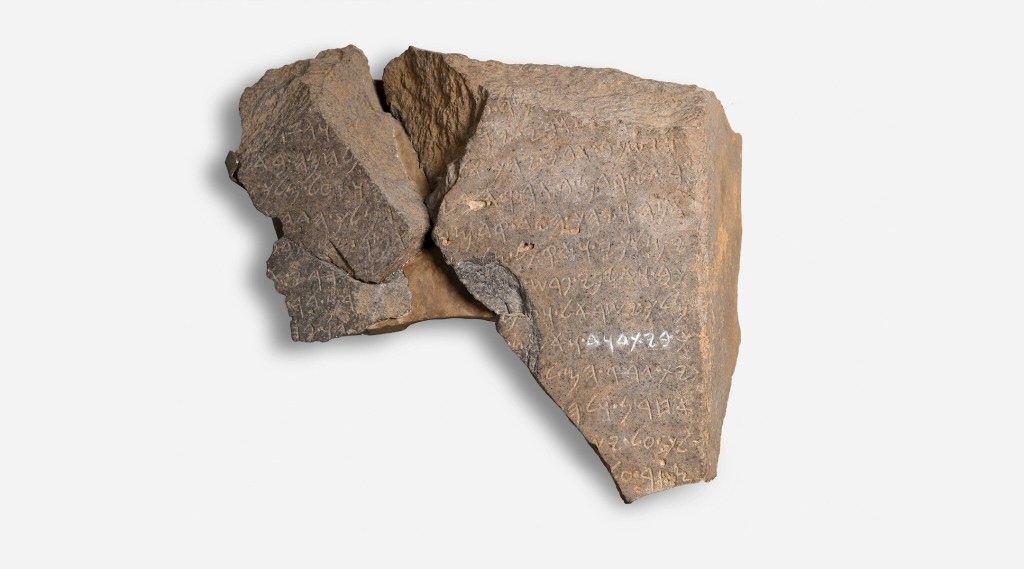
II Kings 12:17 – Hazael Threatens Jerusalem
Hazael king of Syria went up and fought against Gath, and took it; then Hazael set his face to go up to Jerusalem (Where the temple stood: Called the House of God, of the lineage of King David).
“The most stunning aspect of the document is the reference to Judah as the “House of David.” For the first time, it was thought, the name David appeared in an extra-Biblical document.
The Tel Dan Stele : The Shiloh Excavations: Biblical Archeology.com
Author: Bryant G. Wood PhD Category: Amazing Discoveries in Biblical Archaeology Created: 04 May 2011
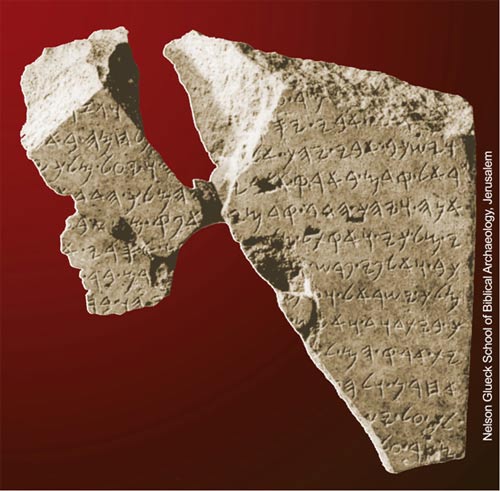
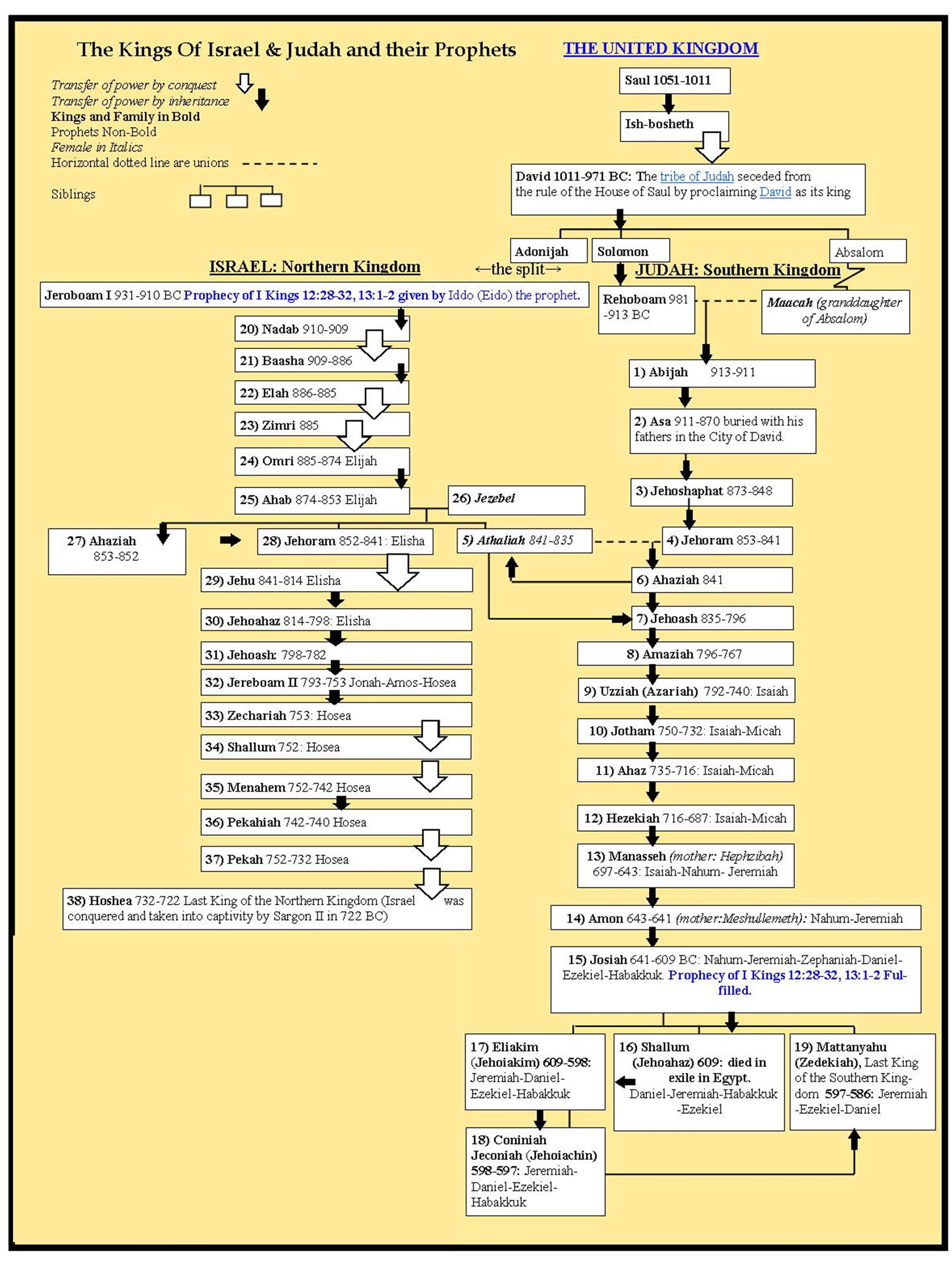
Tel Dan Inscription, the first royal inscription from the kingdom period to be found in Israel. Fragment A (right) was discovered in 1993 and Fragment B (left) was discovered one year later. Dated to ca. 841 BC, the original inscription named at least eight Biblical kings: Ben-Hadad II (Syria), Hazael (Syria), and from the Chart History of Biblical Kings below) Joram/Jehoram (Israel) [#28], Ahab (Israel) [#25], Ahaziah (Judah) [#6], Jehoram (Judah) (#4), Jehu [#29] and King David (of the United Kingdom).
- […] and cut […]
- […] my father went up [against him when] he fought at […]
- And my father lay down, he went to his [ancestors] and the king of I[s-]
- rael entered previously in my father’s land. [And] Hadad made me king.
- And Hadad went in front of me, [and] I departed from [the] seven […-]
- s of my kingdom, and I slew [seve]nty kin[gs], who harnessed thou[sands of cha-]
- riots and thousands of horsemen. [I killed Jo]ram son of [Ahab]
- king of Israel, and [I] killed [Ahaz]iahu son of [Jehoram kin-]
- g of the House of David. And I set [their towns into ruins and turned]
- their land into [desolation …]
- other [… and Jehu ru-]
- led over Is[rael … and I laid]
- siege upon […]
HISTORY OF BIBLICAL KINGS:
A SECOND AUTHORITY: THE MESHA STELE OR MOABITE STONE
II Kings 3:4 Now Mesha king of Moab was a sheepbreeder, and he regularly paid the king of Israel one hundred thousand lambs and the wool of one hundred thousand rams.
At about the same time as the Tel Dan Stele, two French scholars, André Lemaire (1994) and Émile Puech (1994), independently recognized the same phrase in the Mesha Inscription, which has been around for well over 100 years (Wood 1995).
“And the house [of Da]vid dwelt in Horanaim” (line 31). Line 31 is perhaps the most significant line in the entire inscription.
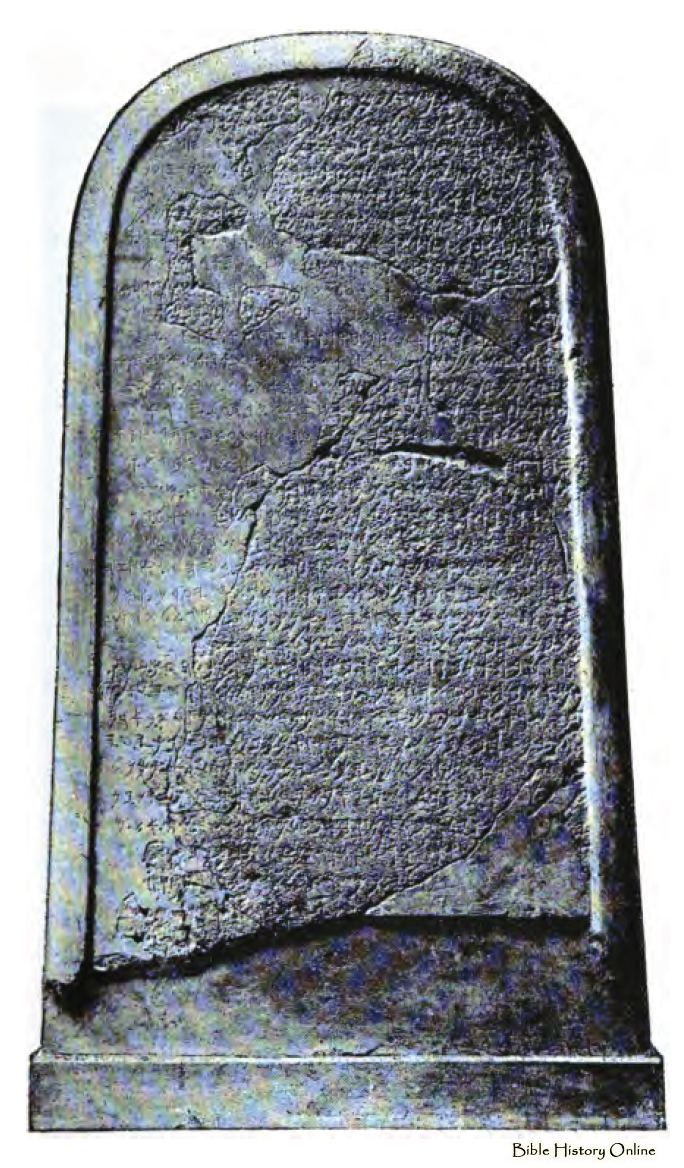
The Mesha Inscription not only mentions Mesha, king of Moab, known in the Bible, but also Omri [See chart History of Kings #24], one of the most powerful kings of the Northern Kingdom (1 Kgs 16:21-28), who ruled 885-873 BC.
A THIRD AUTHORITY! THE SHISHAK INSCRIPTION IN KARNAK
It now likely that the name David is in a third inscription! Egyptologist K.A. Kitchen believes that the phrase “highland of David” appears in the Shishak inscription in the Temple of Amun at Karnak, Egypt (1997: 39–41). All this at a time when a number of scholars were challenging the existence of the United Monarchy and a king name David!”
SHISHAK/SHESHONG
Jerusalem is missing from Karnak’s long list of captured cities. The Biblical version of Sheshonq’s campaign (II Chronicles 12) provides the reason. Sheshonq (or Shishak) spared Jerusalem (and Rehoboam) in exchange for “the treasurers of the temple of the Lord [Yahweh] and the treasurers of the royal palace.”
 Quantum Study Bible