
Words in italic type have been added for clarity. They are not found in the original Hebrew or Aramaic.
Ezekiel 31
- What Can We Learn From This Chapter?
- The potential size and location of the Garden of Eden.
- Many “trees” (kingdoms) were part of the Garden of Eden (Garden of God).
- The fulfillment of God’s Word.
- The history of Egypt’s Pharaohs with Biblical history.
- The list of Assyrian Kings
PRELUDE

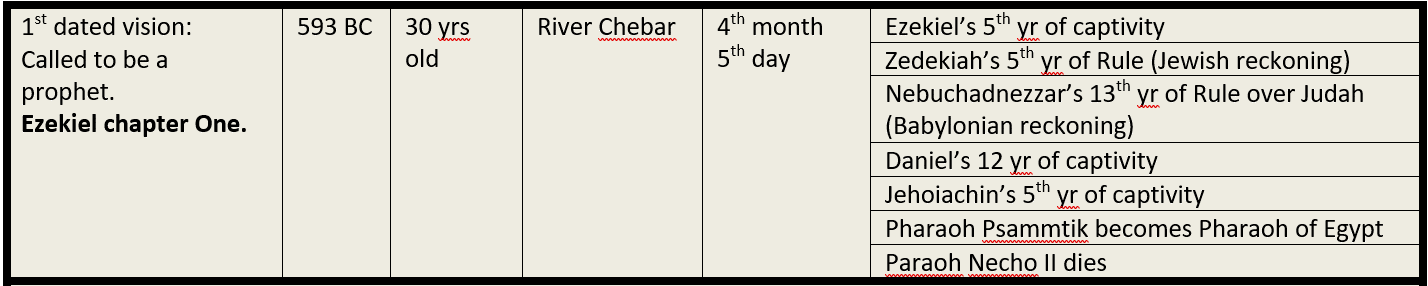
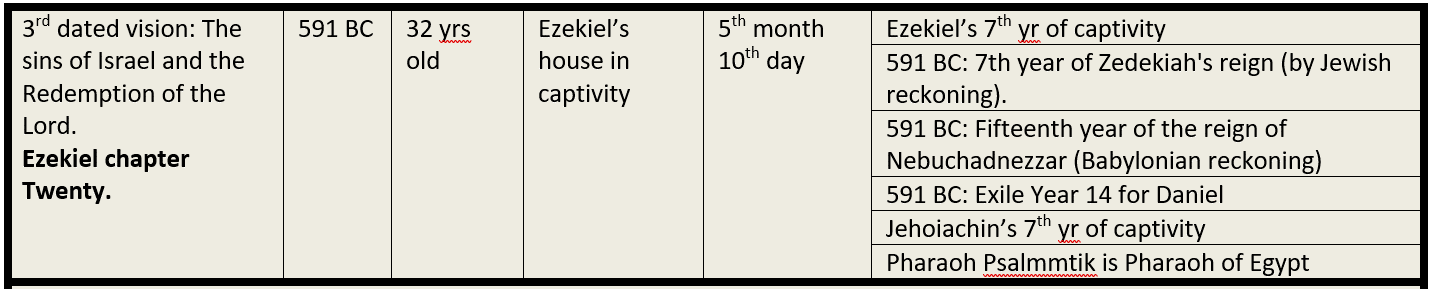
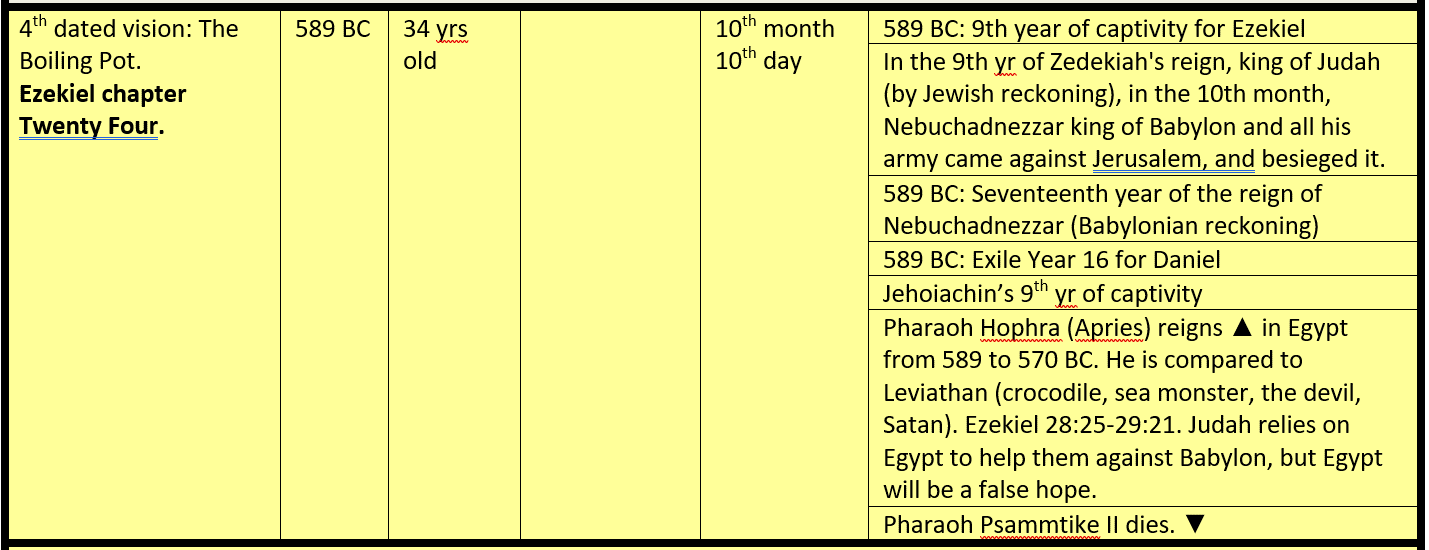
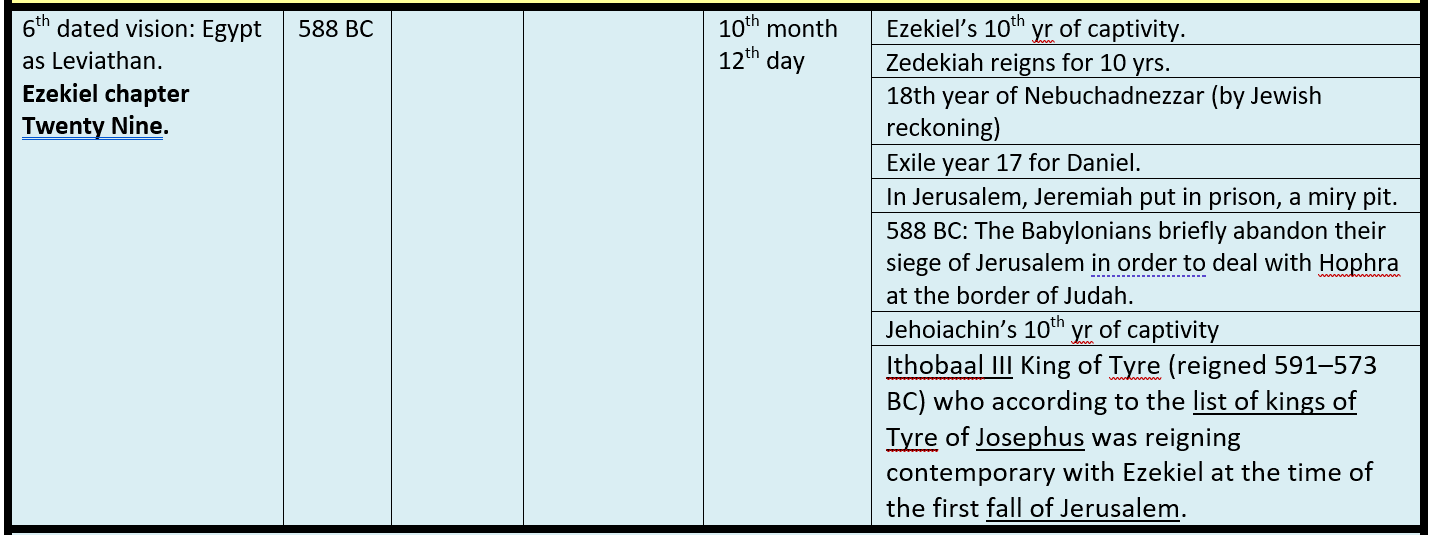
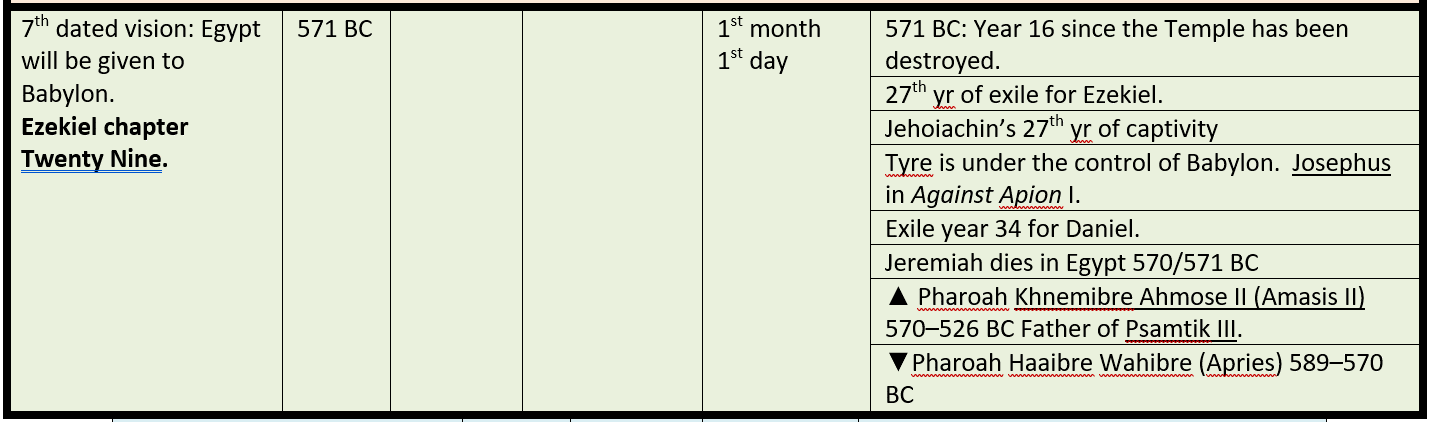
- Amasis quickly declared himself Pharaoh in 570 BC, and Apries fled Egypt and sought refuge in a foreign country. When Apries marched back to Egypt in 567 BC with the aid of a Babylonian army to reclaim the throne of Egypt, he was likely killed in battle with Amasis‘ forces.
Egypt Cut Down Like a Great Tree
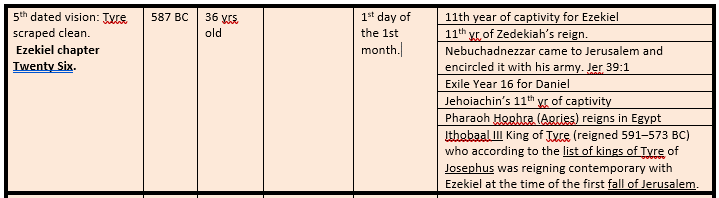
Ezekiel 31:1 Now it came to pass in the eleventh year (587 BC), in the third month (Sivan), on the first day of the month, that the word of the Lord came to me, saying,
- Note: The word of the LORD came to Ezekiel on Sivan (May or June) 1, 587 BC





Ezekiel 31:2 “Son of man, say to Pharaoh king of Egypt and to his multitude:
‘Whom are you like in your greatness?
- The Pharaoh is Hophra Apries II.
Ezekiel 31:3 Indeed Assyria was a cedar in Lebanon,
- Lebanon is known for its cedars.
- At the time, Assyria was in Lebanon.
- Trees, throughout scripture are symbolic of men and the nations in which they rule. God is reminding Pharaoh Hophra of how Assyria was once a great tree, in the same way Egypt is a great nation. If the great nation Assyria could come to its end, so also Pharaoh can be cut down like a magnificent tree.

The line of Assyrian kings ended with the defeat of Assyria’s final king Ashur-uballit II by Babylon in 609 BC, after which Assyria disappeared as an independent political unit, never to rise again.
The other nations in the Mideast shook in fear of Babylon’s growing power.
With fine branches that shaded the forest,
And of high stature;
And its (Assyria’s) top was among the thick boughs.
Ezekiel 31:4 The waters (of people) made it (Assyria) grow (great);
Underground waters gave it height,
With their rivers running around the place where it was planted,
And sent out rivulets (Or channels) to all the trees of the field.
- There are many trees (nations) in the mid-east watered by the life of peoples.
- The “field” is symbolic of “the world” or “worldliness”.
The “waters” are “life”.
Ezekiel 31:5 ‘Therefore its height was exalted above all the trees of the field;
Its boughs were multiplied,
- Its height is its status, its authority, and being “looked up to” was its landmark. It draws attention from all other nations ruled by the kings of their time. The Assyrians were feared.
And its branches became long because of the abundance of water,
As it sent them out.
- Its influence was extended.
Ezekiel 31:6 All the birds of the heavens made their nests in its boughs;
Under its branches all the beasts (nations) of the field (world) brought forth their young;
And in its shadow all great nations made their home (Lit. dwelled).
Ezekiel 31:7 ‘Thus it was beautiful in greatness and in the length of its branches (influence),
Because its (Assyria’s) roots (foundational structure) reached to abundant waters.
Ezekiel 31:8 The cedars in the garden of God could not hide it;
- The cedar is compared to Assyria. There are other cedars (nations) not as predominant.
The fir trees were not like its boughs,
And the chestnut (Or plane, Heb. Armon) trees were not like its branches;
No tree in the garden of God was like it in beauty.
- The firs and the chestnut are unspecified nations.
- CHESTNUT (tree) (עֶרְמﯴן, H6895). Mentioned in Genesis 30:37 and Ezekiel 31:8.
- The chestnut is Castanea sativa, but the tree mentioned in these texts is the Oriental Plane Tree (Platanus orientalis). The Heb. word is ’armôn, which means “nakedness.” The tree sheds its bark, leaving parts of the trunk yellowish or “naked.” It is common throughout Palestine.
9 I made it beautiful with a multitude of branches,
So that all the trees (nations) of Eden envied it,
That were in the garden of God.’ (Garden in Eden)
Cedars, comparing Egypt and Assyria, is noted in the book of Ezekiel as being in the Garden of Eden. Lebanon is known for its cedars. This is another type of tree mentioned beside the Fig Tree except perhaps in a closer time period. We know the location of the Garden of Eden is in the Mideast. It is used as a metaphor for two nations comparing Egypt with Assyria (Syria: Damascus), but it sounds as though the Garden of Eden still exists, albeit without the Tree of Life or the Spirit of God.
Ezekiel 31:3 Assyria was a cedar in Lebanon …9 I made it beautiful with a multitude of branches, So that all the trees of Eden envied it, that were in the garden of God.’
This indicates the Garden of Eden is either close to, or in Lebanon.
It is not unreasonable to conclude that angels with the swords guarding the Tree of Life separated the spiritual realm of Eden from the physical (which exists today). Scripture describes Adam and Eve as being “driven out of the Garden in Eden”.
East of Eden is a place of worldliness, like Nod.
See Genesis 3 {5 of 16} v. 7
- Satan was in the Garden in Eden, beautiful until iniquity was found in him. Both the king of Tyre, the King of Assyria, and the Pharaoh of Egypt were called out as being influenced by Satan. As tall trees they are leaders.
- The following was written to the King of Tyre comparing him to Satan, even as the Pharaoh here is compared to Satan.
- Ezekiel 28:12-15 “You were the seal of perfection, Full of wisdom and perfect in beauty.
13 You were in Eden, the garden of God; Every precious stone was your covering:
The sardius, topaz, and diamond, Beryl, onyx, and jasper, Sapphire, turquoise, and emerald with gold.
The workmanship of your timbrels and pipes (settings)
Was prepared for you on the day you were created. 14 “You were the anointed cherub who covers; I established you; You were on the holy mountain of God; You walked back and forth in the midst of fiery stones. 15 You were perfect in your ways from the day you were created, Till iniquity was found in you.
Ezekiel 31:10 “Therefore thus says the Lord God: ‘Because you (Egypt) have increased in height, and it (the Pharaoh) set its top among the thick boughs, and its (Egypt’s Pharaoh Hophra Apries II) heart was lifted up (Proud) in its height,
Ezekiel 31:11 therefore I will deliver it into the hand of the mighty one of the nations (Babylon’s Nebuchadnezzar), and he shall surely deal with it; I have driven it out for its wickedness.
- Nebuchadnezzar supported Pharaoh’ Hophra Apries II’s general, Amasis who revolted against Apries. In return Nebuchadnezzar had Amasis’ vassalage. Therefore; Egypt would belong to Nebuchadnezzar and Babylon.
Ezekiel 31:12 And aliens (Babylonians), the most terrible of the nations, have cut it down and left it; its branches have fallen on the mountains and in all the valleys; its boughs lie broken by all the rivers of the land; and all the peoples of the earth have gone from under its shadow and left it.
Ezekiel 31:13 ‘On its ruin will remain all the birds of the heavens,
And all the beasts of the field will come to its branches—
Ezekiel 31:14 So that no trees by the waters may ever again exalt themselves for their height, nor set their tops among the thick boughs, that no tree which drinks water may ever be high enough to reach up to them.
‘For they have all been delivered to death,
To the depths of the earth,
Among the children of men who go down to the Pit.’
Ezekiel 31:15 “Thus says the Lord God: ‘In the day when it (Egypt’s Pharaoh Hophra Apries II) went down to hell (Or Sheol), I caused mourning. I covered the deep because of it. I restrained its rivers, and the great waters were held back. I caused Lebanon to mourn (Lit. be darkened) for it, and all the trees (nations) of the field (world) wilted because of it.
Ezekiel 31:16 I made the nations shake at the sound of its fall, when I cast it down to hell (Or Sheol) together with those who descend into the Pit; and all the trees of Eden, the choice and best of Lebanon, all that drink water, were comforted in the depths of the earth.
- In the Garden of Eden is the cedar of Lebanon. This cedar represents Lebanon located in Syria.
Ezekiel 31:17 They also went down to hell with it, with those slain by the sword; and those who were its strong arm dwelt in its shadows among the nations.
Ezekiel 31:18 ‘To which of the trees in Eden will you then be likened in glory and greatness? Yet you shall be brought down with the trees (leaders) of Eden (under the influence of Satan) to the depths of the earth; you shall lie in the midst of the uncircumcised (Gentiles), with those slain by the sword.
This is Pharaoh and all his multitude,’ says the Lord God.”
- Pharaoh Hophra has been given God’s warning, just as God warned the last Babylonian king Belshazzar in Daniel chapter 5.
- History has confirmed Ezekiel’s word of prophecy.
One thought remains, with so much pointing to Lebanon being in the Garden of Eden, the question is: did the Garden of Eden originally include Lebanon? If so, it would make sense that the Garden of Eden included not only Lebanon but Jerusalem when so much scripture calls Jerusalem God’s holy city. It is possible the Garden of Eden was the promised land God gave to Abraham.
Furthermore; the book of Ezekiel appears to reveal the location of the Garden of Eden: Speaking of Lucifer ha Satan:
- Ezekiel 28:13 “You were the seal of perfection,
Full of wisdom and perfect in beauty.
You were in Eden, the garden of God; …
“You were the anointed cherub who covers;
I established you;
You were on the holy mountain of God (Mt Moriah, the location of the Jewish Temple and the location where Abraham offered to sacrifice Isaac);
You walked back and forth in the midst of fiery stones (laws?).
15 You were perfect in your ways from the day you were created,
Till iniquity was found in you (discovered or revealed).
- Conclusion:
The Garden of Eden had the Tree of Life (Jesus), as did Jerusalem.
The Garden of Eden had the Tree of Good and Evil (Law), as did Jerusalem.
If the “promised land” is the Garden of Eden, what about the four rivers described in Genesis?
According to the statements from a Rabbi on [https://www.chabad.org/parshah/article_cdo/aid/3082157/jewish/Where-Are-the-Four-Rivers-that-Come-from-Eden.htm], he makes some interesting statements that suggest the four rivers are the Euphrates, the Tigris, the Nile, and the Blue Nile (all of which would be close to the border of the promised land given to Abraham).
Regardless, in the future, Israel’s borders will be extended during Jesus’ reign on earth simply because God promised it.
THE NEW JERUSALEM
- Revelation 21:16 The city is laid out as a square; its length is as great as its breadth. And he measured the city with the reed: twelve thousand furlongs. Its length, breadth, and height are equal (1,038 miles). 17 Then he measured its wall: one hundred and forty-four cubits, according to the measure of a man, that is, of an angel.
- CORRECTION ON MAP BELOW: 1,038 miles should be 1,380 miles (Both on map and in text).
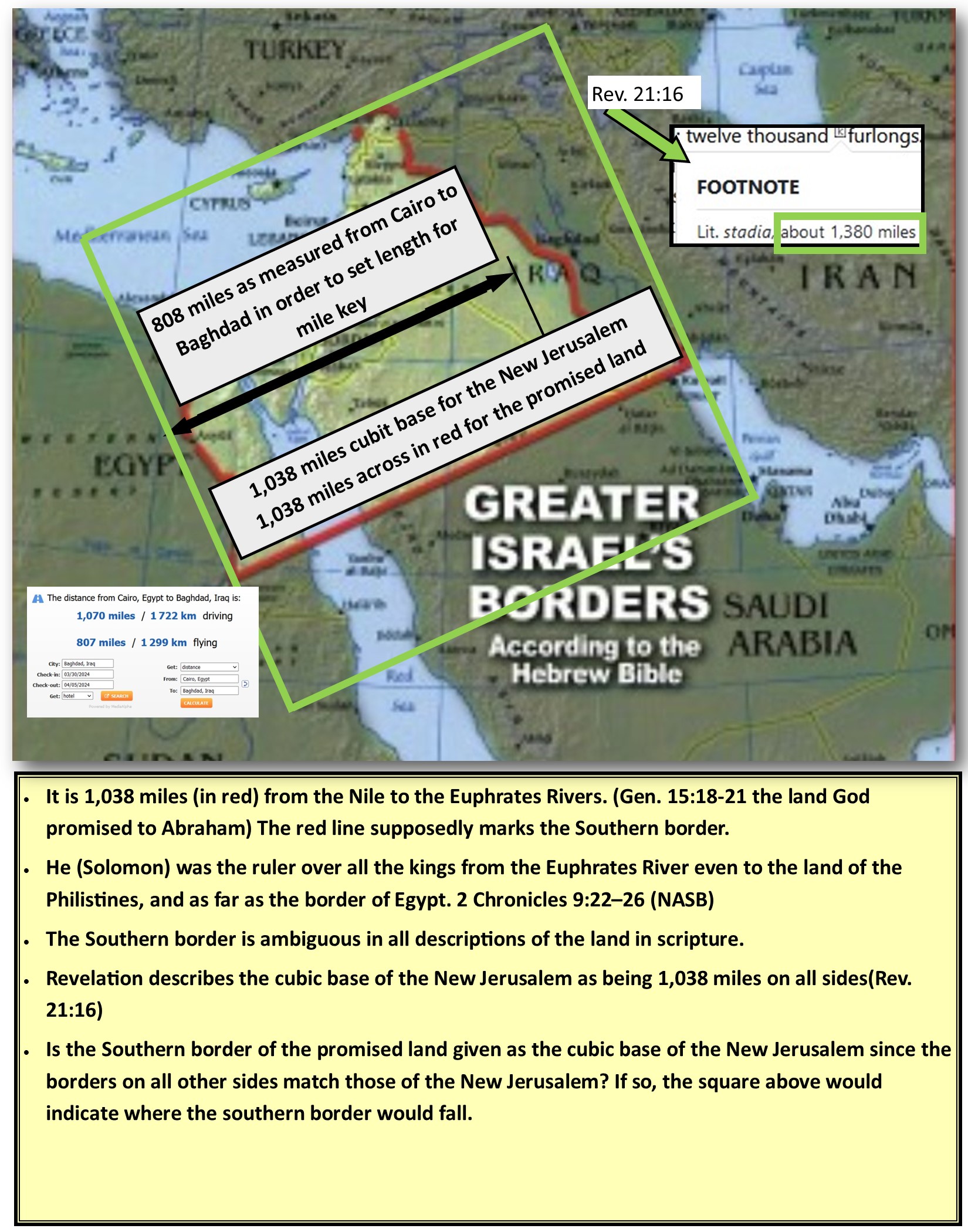
- Could the Promised Land, the New Jerusalem, and the Garden of Eden be the same location with the same boundaries?
Previous: Ezekiel 30 Egypt vs Babylon
Next: Ezekiel 32 Pharaoh is Leviathan
 Quantum Study Bible