
Words in italic type have been added for clarity. They are not found in the original Hebrew or Aramaic.
Joshua 18
- About the title: The person is Jesus, the place is Shiloh (the Messiah), and the Thing is a Serene Peace; All are Shiloh.
The Remainder of the Land Divided
Joshua 18:1 Now the whole congregation of the children of Israel assembled together at Shiloh, and set up the tabernacle of meeting there. And the land was subdued before them. 2 But there remained among the children of Israel seven tribes which had not yet received their inheritance.
Joshua 18:3 Then Joshua said to the children of Israel: “How long will you neglect to go and possess the land which the Lord God (yᵊhōvâ ‘ĕlōhîm) of your fathers has given you?
Joshua 18:4 Pick out from among you three men for each tribe, and I will send them; they shall rise and go through the land, survey it according to their inheritance, and come back to me.
Joshua 18:5 And they shall divide it into seven parts. Judah shall remain in their territory on the south, and the house of Joseph (Ephriam and Manessah) shall remain in their territory on the north.
Joshua 18:6 You shall therefore survey the land (describe in writing) in seven parts and bring the survey here to me, that I may cast lots for you here before the Lord our God (yᵊhōvâ ‘ĕlōhîm).
Joshua 18:7 But the Levites have no part among you, for the priesthood of the Lord (yᵊhōvâ) is their inheritance. And Gad, Reuben, and half the tribe of Manasseh have received their inheritance beyond the Jordan on the east, which Moses the servant of the Lord (yᵊhōvâ) gave them.”
Joshua 18:8 Then the men arose to go away; and Joshua charged those who went to survey (describe in writing) the land, saying, “Go, walk through the land, survey it, and come back to me, that I may cast lots for you here before the Lord (yᵊhōvâ) in Shiloh.”
Joshua 18:9 So the men went, passed through the land, and wrote the survey (to describe in writing) in a book in seven parts by cities; and they came to Joshua at the camp in Shiloh.
Joshua 18:10 Then Joshua cast lots for them in Shiloh before the Lord (yᵊhōvâ), and there Joshua divided the land to the children of Israel according to their divisions (portions).
- THE PLACE
Archeology: Shiloh
Tel Shiloh (Mound of Shiloh) is located about 25 miles (45 kilometers) north of Jerusalem. It was settled by the Amorites (of the hill country – Num. 13:29) in the Middle Bronze Age as an unwalled village. Soon they the people of Shiloh built a stone fortification wall around their village, enclosing an area of 4.25 acres.
Map of the present-day archaeological site: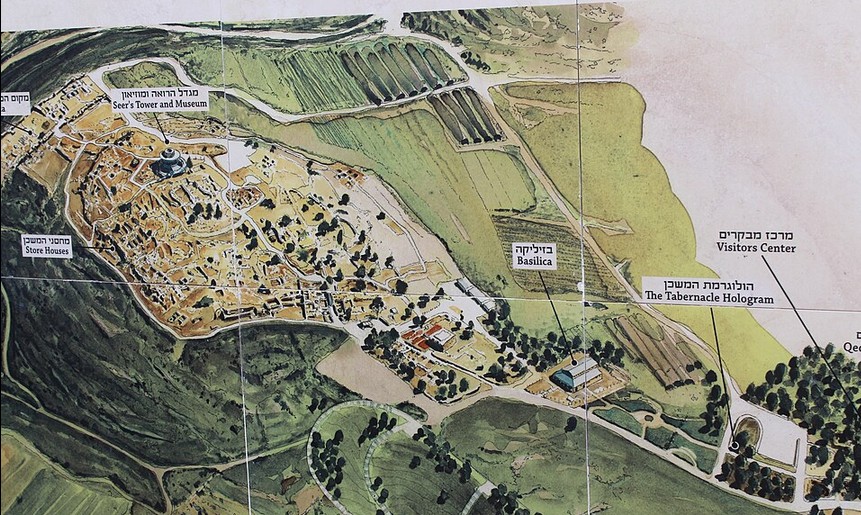
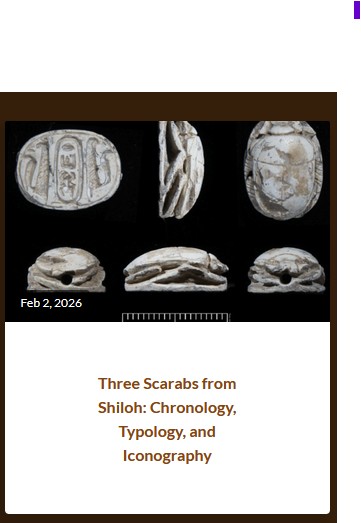
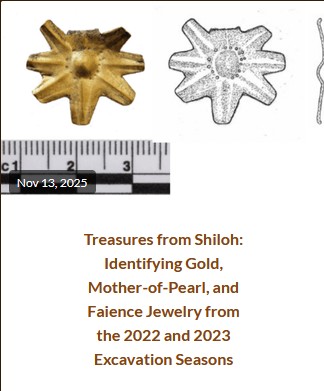
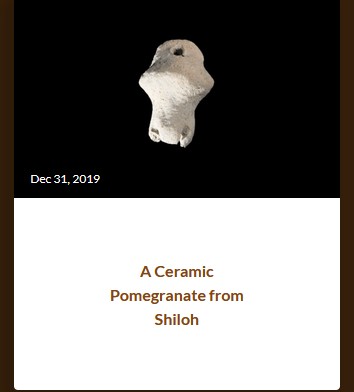
- From a biblical perspective, Shiloh is best-known for being the place where the Tabernacle stood for over 300 years. The Israelites arrived at Shiloh in the Late Bronze Age to set up the Tabernacle and began offering sacrifices to the Lord there. Then the whole congregation of the people of Israel assembled at Shiloh and set up the tent of meeting there. (Josh. 18:1)
- THE PERSON
(Genesis 49:10) The Blessing of Jacob:
The scepter shall not depart from Judah, nor a lawgiver from between his feet until Shiloh come; and unto Him shall the gathering of the people be.
@Prophesy Alert: Shiloh is the Messiah, Jesus, when He returns to reign in Jerusalem during the 1,000-year Millennium. Shiloh is where the tabernacle was set up, and the Millennium is when God “tabernacles” with man, symbolic of the “Feast of Booths”.
The full blessing of Jacob to his son, Judah. Jesus is of the tribe of Judah.
Genesis 49:9 Judah is a lion’s whelp;
From the prey, my son, you have gone up.
He bows (couches) down, he lies down as a lion;
And as a lion, who shall rouse him?
10 The scepter (used by kings demonstrating their kingship)
shall not depart from Judah,
Nor a lawgiver from between his feet,
Until Shiloh comes;
And to Him shall be the obedience of the people.
11 Binding his donkey to the vine,
And his donkey’s colt to the choice vine,
He washed his garments in wine,
And his clothes in the blood of grapes.
12 His eyes are darker than wine,
And his teeth whiter than milk.
- THE THING:
The literal Hebrew meaning of Shiloh is tranquility, peace, and rest, like Psalm 23:2, “He makes me to lie down in pastures of tender grass; He leads me beside the still waters of rest.”
However, because of priestly corruption and idol worship, Shiloh became a byword for a curse; it was utterly destroyed and abandoned due to its wickedness and apostasy.
A Blessing or a Curse?
Like Deuteronomy 27:11-13, when Moses divided the tribes and commanded that they shout back and forth from Mount Gerizin, the blessings for obedience, and Mount Ebal, the curses for disobedience.
Or like Jesus, a blessing to the children of faith, but a curse to the condemned.
John 3:18 “He who believes in Him is not condemned; but he who does not believe is condemned already, because he has not believed in the name of the only begotten Son of God.
The Land of Benjamin
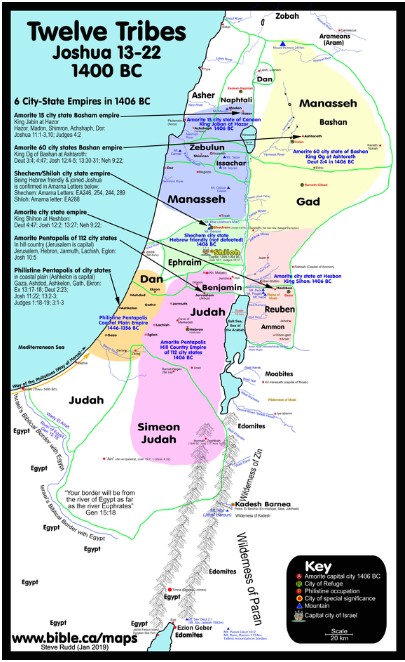
Joshua 18:11 Now the lot of the tribe of the children of Benjamin came up according to their families, and the territory of their lot came out between the children of Judah (below Benjamin) and the children of Joseph (Above: Ephraim above Benjamin, and Manessah above Ephraim).
Joshua 18:12 Their border on the north side began at the Jordan, and the border went up to the side of Jericho on the north, and went up through the mountains westward; it ended at the Wilderness of Beth Aven.
Joshua 18:13 The border went over from there toward Luz, to the side of Luz (which is Bethel) southward; and the border descended to Ataroth Addar, near the hill that lies on the south side of Lower Beth Horon.
Joshua 18:14 Then the border extended around the west side to the south, from the hill that lies before Beth Horon southward; and it ended (Lit. its goings out were) at Kirjath Baal (which is Kirjath Jearim), a city of the children of Judah. This was the west side.
Joshua 18:15 The south side began at the end of Kirjath Jearim, and the border extended on the west and went out to the spring of the waters of Nephtoah.
Joshua 18:16 Then the border came down to the end of the mountain that lies before the Valley of the Son of Hinnom, which is in the Valley of the Rephaim (Lit. Giants) on the north, descended to the Valley of Hinnom, to the side of the Jebusite city on the south, and descended to En Rogel.
Joshua 18:17 And it went around from the north, went out to En Shemesh, and extended toward Geliloth, which is before the Ascent of Adummim, and descended to the stone of Bohan the son of Reuben.
Joshua 18:18 Then it passed along toward the north side of Arabah (Beth Arabah, Josh. 15:6; 18:22), and went down to Arabah.
Joshua 18:19 And the border passed along to the north side of Beth Hoglah; then the border (Lit. the goings out of the border were) ended at the north bay at the Salt Sea, at the south end of the Jordan. This was the southern boundary.
Joshua 18:20 The Jordan was its border on the east side. This was the inheritance of the children of Benjamin, according to its boundaries all around, according to their families.
Joshua 18:21 Now the cities of the tribe of the children of Benjamin, according to their families, were Jericho, Beth Hoglah, Emek Keziz, 22 Beth Arabah, Zemaraim, Bethel, 23 Avim, Parah, Ophrah, 24 Chephar Haammoni, Ophni, and Gaba: twelve cities with their villages; 25 Gibeon, Ramah, Beeroth, 26 Mizpah, Chephirah, Mozah, 27 Rekem, Irpeel, Taralah, 28 Zelah, Eleph, Jebus (which is Jerusalem), Gibeath, and Kirjath: fourteen cities with their villages.
BENJAMIN’S CITIES
- 1. Jericho
- 2. Beth Hoglah
- 3. Emek Keziz
- 4. Beht Arabah
- 5. Zemaraim
- 6. Bethel
- 7. Avim
- 8. Parah
- 9. Ophrah
- 10. Chephar Haammoni
- 11. Ophni
- 12. Gaba
- 1. Gibeon
- 2. Ramah
- 3. Beeroth
- 4. Mizpah
- 5. Chephirah
- 6. Mozah
- 7. Rekem
- 8. Irpeel
- 9. Taralah
- 10. Zelah
- 11. Eleph
- 12. Jebus (Jerusalem)
- 13. Gibeath
- 14. Kirjath
Joshua 18:28 (cont.) This was the inheritance of the children of Benjamin according to their families.

